Services
Engineering software.
Built on automation experience.
I build custom web applications and AI agents to automate manual work. You can bring a specific task, or we can look at how your team works and decide what is worth automating.
Engineering software
Web applications built for your business. My background in packaging machinery, controls and pharmaceutical and medical-device validation helps me understand the work as well as the software.
A task you already have in mind
Show me how the work is done today, the information it uses and what the result should be. I can turn that into a scoped web application and agree how we will check it works.
Finding what to automate
If you do not have a particular tool in mind, we can examine how your team works, identify repeated manual steps and decide where building software would be worthwhile.
Software I have built
A browser-based PLC simulator with a custom compiler and unit-test harness. It runs Ladder Logic and Structured Text and tests how the code behaves.
AI agents
Agents that carry out tasks using your business software and information. We start with the work you want done, then establish whether an agent is a suitable way to automate it.
The task and the tools
We work through the job the agent should do and the software and information it needs. I build the integrations it uses to read information and take actions.
Checking the result
We test the agent on examples of the work, including failures, and agree which actions it can take on its own and which need someone to check them.
An agent I have built
My private development agent writes Ladder Logic and Structured Text AOIs and their tests, compiles the code, runs the tests and fixes failures. These capabilities work today.
Control systems
Hands-on programming, commissioning and documentation for machines and process lines. The foundation of my engineering experience.
PLC programming
Rockwell / Allen-Bradley in Studio 5000 and Siemens in TIA Portal. Structured Text, Ladder Logic and Add-On Instructions. New code written to a standard the site team can maintain, and changes to existing code without breaking what already works.
HMI and SCADA development
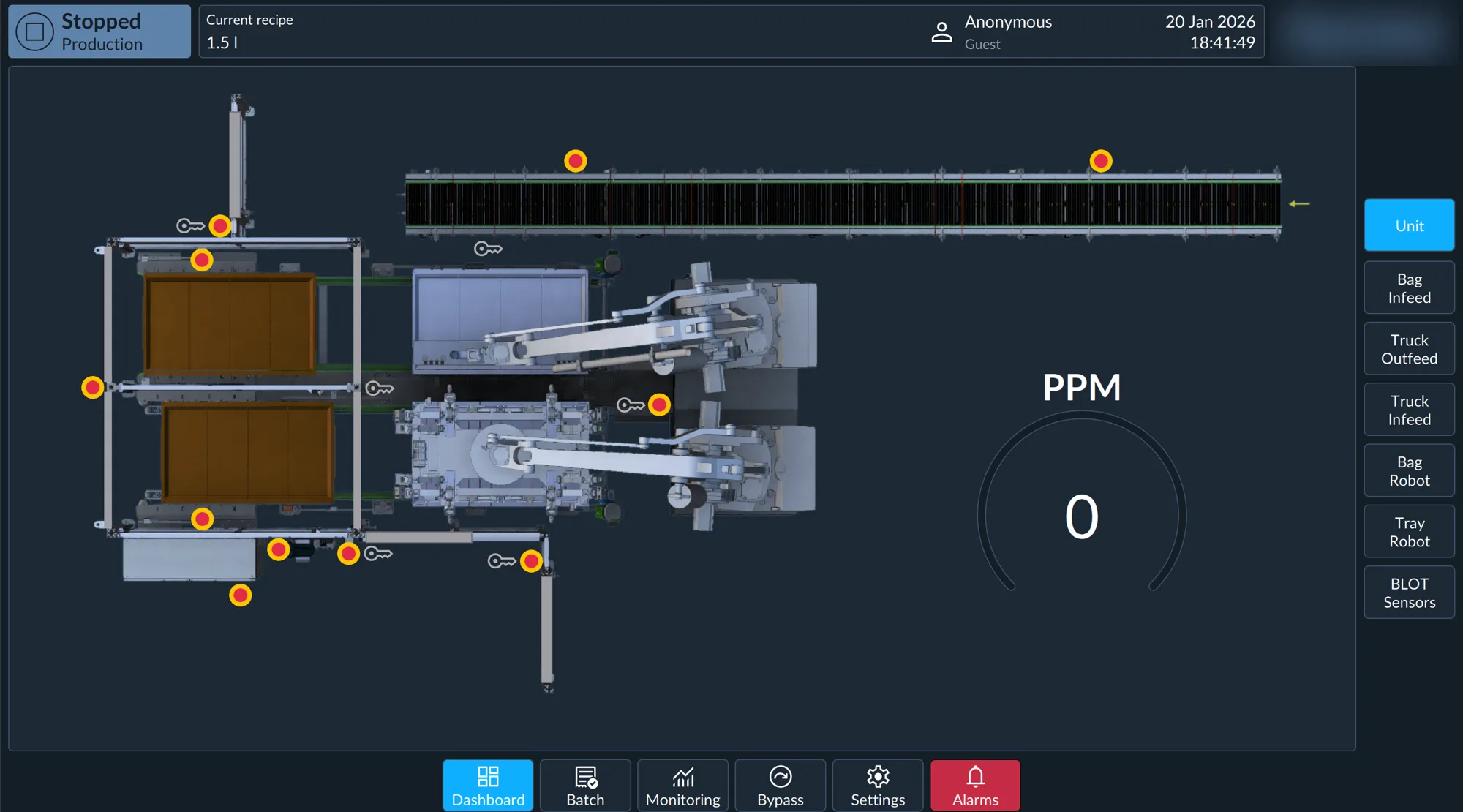
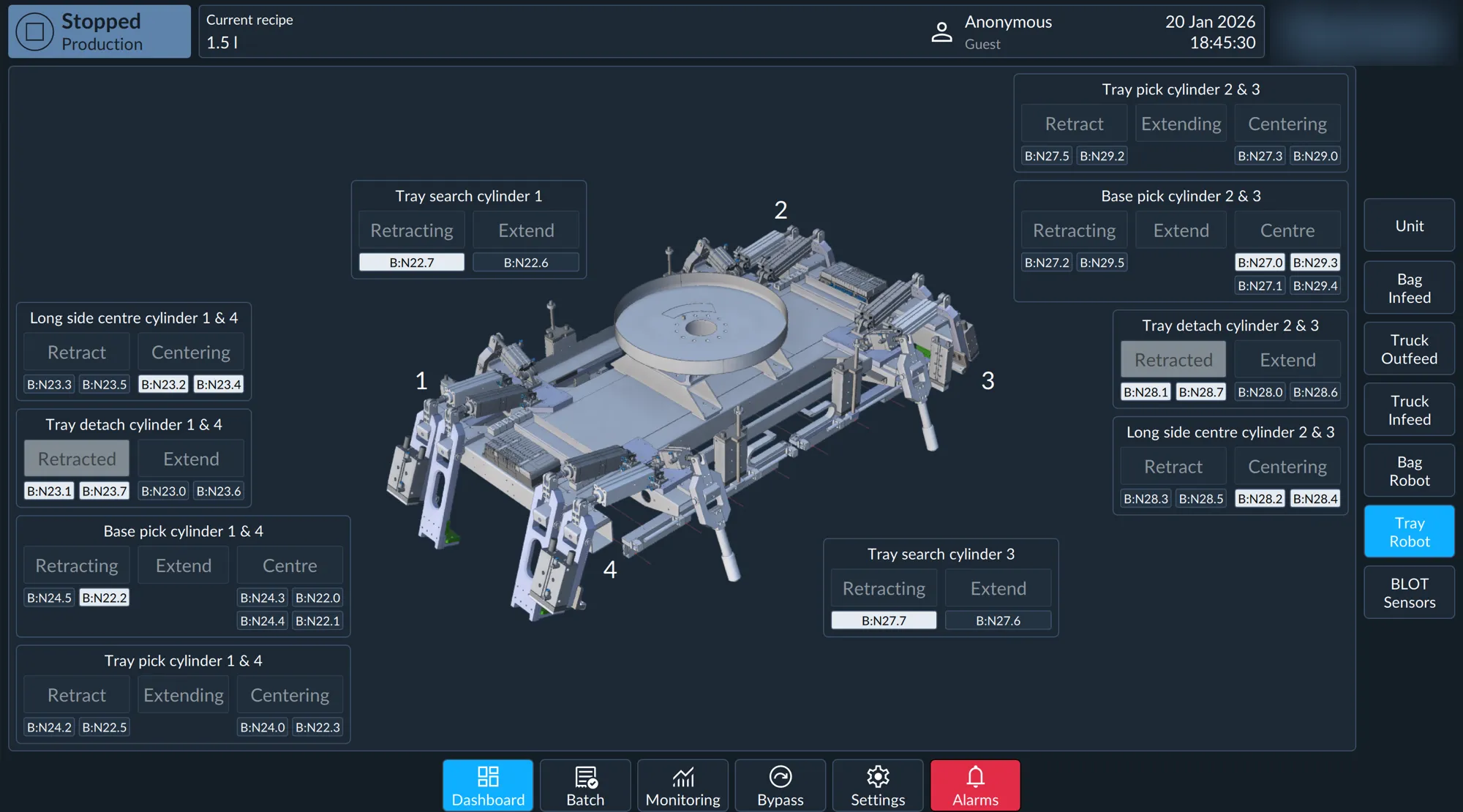
FactoryTalk View ME, FactoryTalk Optix and WinCC in TIA Portal. Screens designed for the operator on the line, alarms that mean something, and consistent navigation across a machine or a suite.
Robot programming and integration
ABB, Universal Robots, Mecademic and Epson. Robot cells integrated with the PLC and safety system. Handshaking, recipe handling, error recovery and cycle time work.
Commissioning and site support
On site for FAT, SAT and start-up. Loop checks, I/O checkout, sequence testing and the fixes that only show up when the machine runs for real.
Validation and documentation
Functional and design specifications, test protocols and executed test records for pharma and medtech projects. Written to fit the client quality system, not the other way round.
Platforms
Day-to-day tools. Other platforms on request.
Project examples
A sample of delivered work. Most of it for machine builders and integrators, so end clients are not named here. References on request.
- Tray loaders with Rockwell PLC, HMI and an ABB robot for a pharmaceutical filling line
- Packaging machines with UR collaborative robots and Siemens PLC and HMI, commissioned in Italy, Germany and the United States
- Vial conveyor PLC and HMI in TIA Portal for a biopharma site
- Medical device assembly machines in Studio 5000, FactoryTalk View and View Designer
- Epson robot cells for an optical lens manufacturer, commissioned in Mexico, Brazil and the Philippines
- Siemens PLC integration with a Domino printer over Ethernet/IP
- Audit trail batch reports for Siemens HMIs, with a custom C# application
- FactoryTalk Optix HMI development
- A browser-based PLC simulator with a Structured Text and Ladder compiler, and an AI tutoring agent built on top of it
How an engagement works
Scope
Bring a task you want automated, or we can examine your current work to identify opportunities. We agree the problem and the expected result before quoting.
Fixed-price quote
A written quote with what is included, what is not, and how long it will take. No hourly surprises.
Delivery
Code, screens and documents delivered in stages you can review. You can check progress throughout the project.
Handover
Software, documentation and agreed support. For control systems projects, this can include commissioning and start-up.
Start a project
Describe the work you would like to automate, or where your team spends time on manual tasks. A short outline is enough.